
Stability, Scarcity, and the Nervous System That Didn’t Get the Memo

This essay originally appeared as a guest post on Chris Moeller’s Substack (Chasing Arrows) on January 22, 2026. Reposted here in my own space.
When I read Chris Moeller’s piece on stability and scarcity, I appreciated the systems thinking immediately. It was smart, clear, and it named something a lot of people feel but struggle to articulate.
But what hit me wasn’t intellectual. It was physical.
It was that gut-punch feeling you get when you just know something is true. Like walking into a room and knowing people were just fighting. Like every hair on your body standing up because a song dragged a memory out of you before you even had a chance to agree.
I knew I had to write.
Not because I’m interested in airing my dirty laundry. Not because I’m trying to turn my origin story into a brand. I wrote because stability and scarcity are not abstract ideas to me. They are DEEPLY personal. They’re experiences that have always lived in my body, and they still do. Even when I look “fine.” Even when the spreadsheets say I should feel safe.
Chris invited me to contribute this as a guest essay on his Substack, and I’m reposting it here in my own space because this is where my work and writing live. If you want the original guest post on his publication, check out the links I posted above.
Here’s the essay.
Stability, Scarcity, and the Nervous System That Didn’t Get the Memo
Kelly Colón | Eledex Consulting | The Neurospicy Professor
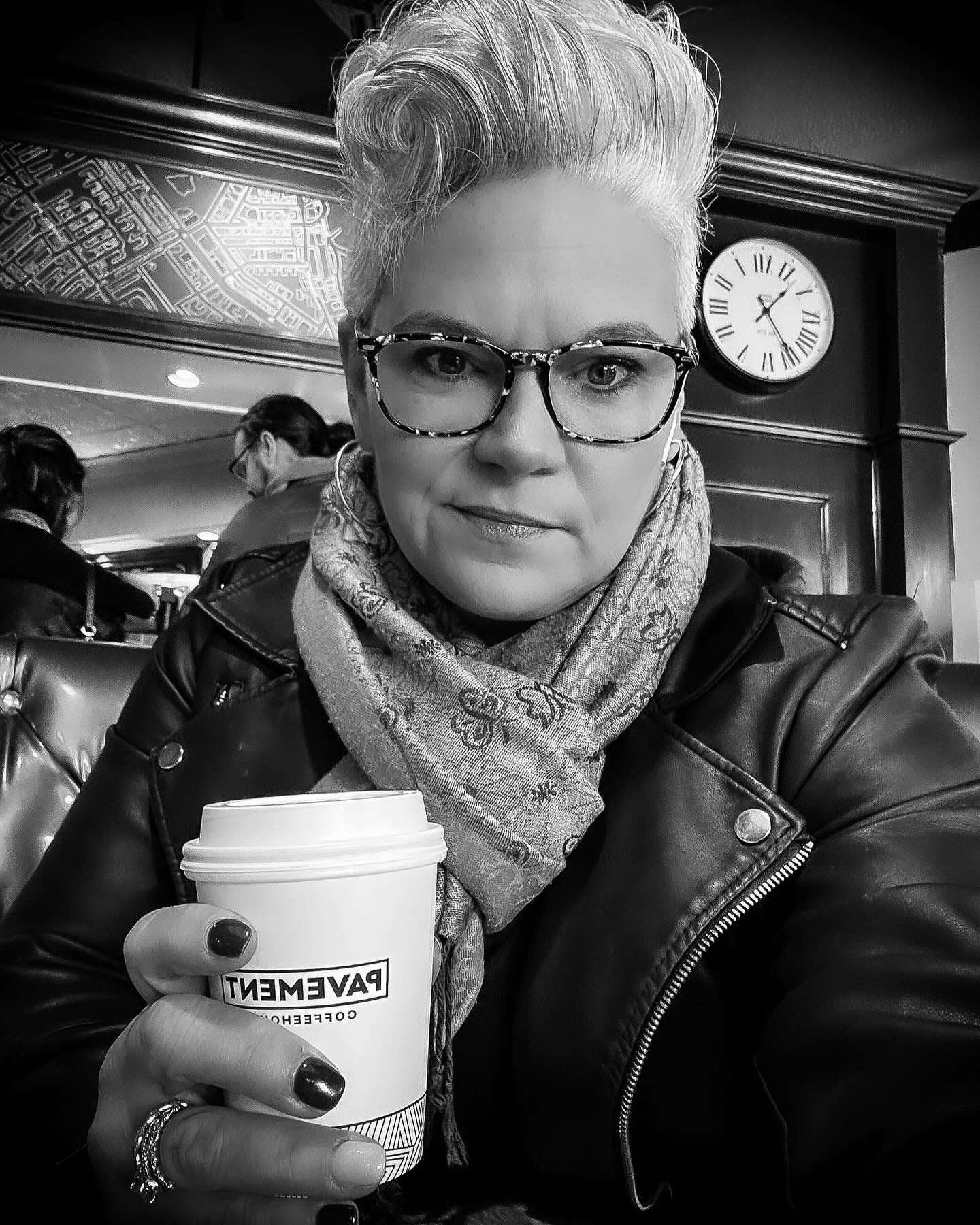
I used to think instability was the root of all my problems. If I could just get stable, I’d be okay. If I was okay, I’d be happy. If I was happy… well. You know the rest. I really believed that stability was the cure. Not for everything, but for the constant sense that something bad was always around the corner. That one day I’d build a life where I could finally exhale.
That belief makes perfect sense when you know how I grew up.
I grew up in a broken, abusive home with a mother who was bipolar and struggling with mental illness, and a biological father who was physically and verbally abusive. We had food instability, housing instability, financial instability. The kind of instability that doesn’t just create “hard memories,” it creates a way of moving through the world. It trains you to stay alert, to read the room, to anticipate shifts, to carry your own safety because nobody else is carrying it for you. When you live like that long enough, stability stops being a nice-to-have. It becomes a fantasy you organize your entire future around.
So I did what a lot of people do when they’re trying to outrun an origin story. I chased stability in the only ways I knew how: through milestones that look responsible and respectable from the outside. I got married. I had children. I got divorced and remarried. I chased education and collected degrees like they were a form of insurance. I chased the corporate career, assuming that titles and bigger paychecks would finally create enough distance between me and the life I came from. I wasn’t chasing luxury. I was chasing relief. I wanted the kind of stability that meant I didn’t have to brace for impact all the time.
But here’s the part that took me decades to understand: stability is not only something you build around yourself. It’s something your body has to believe. I could be “stable” on paper and still feel like everything was fragile. I could have the boxes checked and still be operating like the floor might drop at any moment, because that’s what my nervous system was trained to expect. That’s the quiet trap in the stability narrative. We treat stability like a checklist, like if you have the house, the job, the salary, the benefits, then you’re safe. But safety isn’t a spreadsheet line item. It’s a felt experience, and some of us were never taught how to feel it.
That’s why the house mattered so much when I got it in my first marriage. It wasn’t just a house. It was the symbol. It was supposed to mean the chase worked. It was supposed to be the moment my life finally became permanent. Then 2008 hit, the market crashed, and I lost it. And the loss wasn’t just financial. It cracked the story I’d been telling myself since childhood, the story that stability is something you earn if you work hard enough and make smart enough choices. That crash taught me something brutal: sometimes the system shifts and you’re just collateral, and the floor drops whether you did everything right or not.
You’d think that would have been the moment I stopped chasing stability. It wasn’t. I chased it harder. I went deeper into corporate life, deeper into achievement, deeper into the idea that if I could just prove enough, build enough, earn enough, nothing could touch me again. And yes, the paycheck helped. The benefits helped. The optics helped. But it came at the expense of my health, my wellbeing, and my actual life. I was building the kind of stability society rewards, and I was fucking miserable.
That’s where my understanding of scarcity changed. Scarcity isn’t only money. Scarcity is time. Scarcity is energy. Scarcity is emotional bandwidth. It’s waking up already tired because you’re always managing threat, always running the math, always anticipating what’s next. It’s the constant feeling that you can’t stop moving because stopping feels dangerous. It’s living like stability is something you can lose at any moment, because you’ve already watched it disappear.
And then one day I said, no. Not politely. Not gradually. I quit without a plan, without a savings net, without anything that would make a practical person feel comfortable. From the outside, it looked like I was jumping straight back into instability and scarcity. From the inside, it felt like the first honest decision I’d made in years. And the part that still makes me laugh, because it’s so ironic it’s almost insulting, is that stepping off the “stable path” was the first time I started to feel stable. Not financially at first, not predictably, not in a way that would satisfy a spreadsheet, but in the way that matters. I could breathe. I was making decisions based on meaning and values instead of fear. I stopped trying to solve my childhood by building a perfect adult life, and I started building a life I could actually live inside.
I’m not romanticizing instability. I’m not pretending scarcity is character-building. I know what it costs. But I do think we’ve been sold a version of stability that isn’t real. If your definition of stability is “nothing bad happens,” you’ll spend your whole life chasing something that doesn’t exist. Life will always have uncertainty baked into it. Markets crash. Jobs disappear. bodies change. family dynamics shift. kids need things. reality keeps reality-ing. So stability can’t be the absence of uncertainty. It has to be your capacity to meet uncertainty without losing yourself.
That’s why I’m convinced stability is, in fact, the new scarcity, and also why I think it’s been scarce for longer than we like to admit. For people who grew up with safety nets, stability can feel like a default setting, something you return to even after setbacks. For people who grew up like I did, stability is often a chase, and the chase itself becomes a lifestyle. You get so good at chasing it that you call it ambition. You call it responsibility. You call it success. Meanwhile, your body is still bracing like a kid who never knew what was coming next.
These days, when I talk about stability, I don’t mean “the optics are good.” I mean I can rest. I can breathe. I can make decisions without panic driving the car. I mean my life isn’t built around self-abandonment for the sake of a paycheck. I mean I’m building stability where it actually matters: in my body, in my environment, and in the systems I choose to participate in. Because my nervous system never got the memo when I checked all the boxes. So I stopped trying to convince it with proof. I started giving it something real.
And this is where my work, my brain, and my body all collide.
Because scarcity and stability aren’t just economic conditions. They’re felt states. They live in the body first, and then we build stories around them. You can tell yourself you’re fine all day long, but if your nervous system doesn’t believe you, it doesn’t matter. Your sleep will get weird. Your focus will evaporate. Your patience will go on a smoke break. Your baseline will shift from “calm” to “braced,” and you’ll call it normal because you’ve had to.
This is also why neurodiversity matters in this conversation. ADHD, anxiety, trauma histories, sensory sensitivity, all of it changes how stability and scarcity land. It’s not just “mindset.” It’s executive function. It’s threat response. It’s the way cognitive load builds when you’re constantly managing uncertainty, transitions, ambiguity, and invisible expectations. When stability is fragile, or when it’s performative, it takes more energy to hold yourself together than people realize. And for a lot of neurodivergent people, that energy cost shows up as overwhelm, shutdown, burnout, irritability, health issues, or the familiar shame spiral of “why can’t I just handle life like everyone else.”
Which is why I keep coming back to this line: humans experience systems through their bodies.
We experience school systems through the way our stomach drops before an email. We experience workplace systems through the way our shoulders stay tense even on a day off. We experience housing systems through the way our chest tightens when rent goes up. We experience family systems through the way we scan faces and tone. Even when we pretend we don’t. Even when we’re “high functioning.” Even when we’re doing everything right.
Stability, the real kind, is not just money or milestones. It’s margin. It’s support. It’s predictability where it matters. It’s environments that don’t constantly trigger survival mode. It’s routines that are designed for actual humans, not an imaginary version of a person who never gets tired, never gets overwhelmed, never has a bad week, never has a brain that runs hot.
That’s the work, honestly. Not chasing the optics of stability, but building the conditions where your body can finally unclench. Because when your body feels stable, your brain works better. Your relationships are better. Your capacity expands. Your life becomes livable.
And if that sounds simple, good. It is. It’s just not easy. Not in the world we’ve built. Not for the people who started out bracing.
I’m always full of gratitude that I get the incredible blessing of such amazing humans in my life who challenge me, accept me and push me to think beyond my own limitations. Thank you Chris for allowing me to contribute to your publication and for pushing me. I am looking forward to returning to the podcast, The Edge Report…From Bricks to Clicks so we can continue to talk about stability as both an economic condition and a human one.
This framing of stability as a felt experience rather than a checklist is incredibly well articulated. The part about your body still bracing even when the spreadsheets say you should feel safe basically describes my entire 20s and early 30s. I spent years thinking more achievements woud finally calm my nervous system down but it never did. Finally realized I had to address the beleif patterns not just collect more proof of being ok.