
This Was Not in the Syllabus
My students expected spreadsheets, instead they got flour on their hands and a real understanding of volume.

I teach Construction Cost Controls and Estimating and Endicott College in Beverly, Massachusetts.
Which sounds very serious and grown-up until you realize two things:
I don’t have a materials lab.
And my students are business management, interior architecture majors taking construction as a minor, which means they most certainly did not sign up for a dirty materials lab anyway. They signed up for an elective. They were expecting easy vibes and maybe a spreadsheet or two.
This week we hit the concrete module. Basics. Specifying. Performance. Calculating volume and cubic yards. It was also the 1st week back from Spring Break.
Going into this week, I knew exactly what I didn’t want to do.
I didn’t want to spend a full class period watching students copy a formula, plug numbers into a worksheet, and walk away thinking that equals understanding.
Because it doesn’t.
They can memorize cubic yards and still not have a clue what they’re actually calculating or why.
They can get the “right answer” and still be totally unprepared for the moment real life shows up with a form, a constraint, a budget, and someone asking, “So how much do we need?”
So today I left our big non-ideal classroom and moved (more like squished) everyone into a conference room.
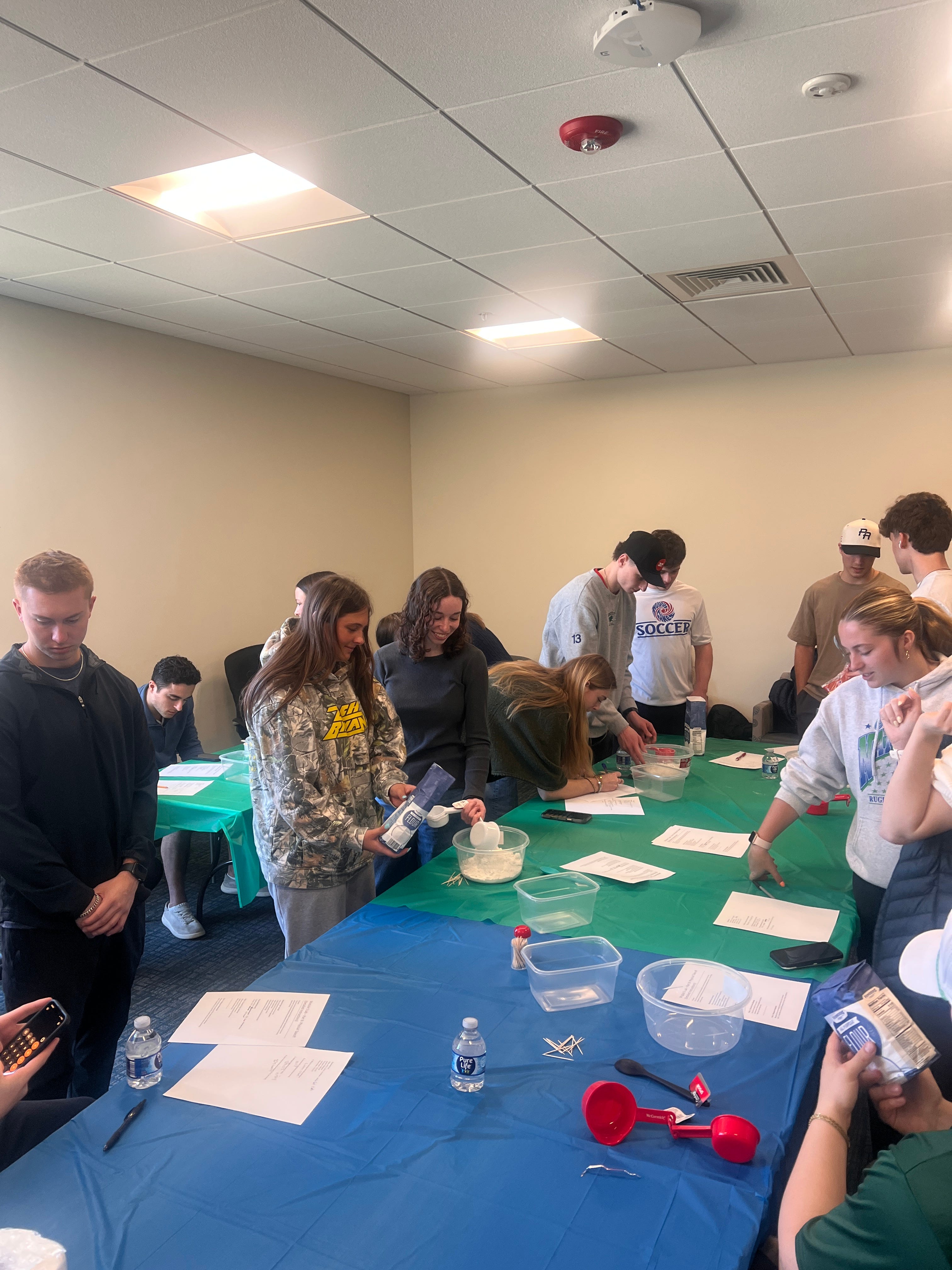
We pretended flour was concrete.
Tupperware was formwork.
Toothpicks were rebar.
Yes, we made a mess.
Yes, I looked slightly unhinged. (If you ask most of my students past and present - I usually look slightly unhinged on the regular.)
And yes, it was worth it.
Because the second students watch “concrete” fill a container (aka formwork), the math stops floating in space.
They can see volume. They can see what “fills the form” actually means. They can see how easy it is to underestimate when your brain has no reference point for what you’re doing.
Some teams under-filled. Some over-filled. A few had to recalibrate. There was debating. There was re-checking. There was that very specific kind of group frustration that turns into learning if you don’t shut it down too fast.
That’s the moment I’m after.
Not just correct answers.
Understanding.
I’ve taught long enough to know students can sit through lectures and still not internalize anything. They can repeat definitions and still not know what they mean. They can perform “school” and still not have anything they can use or know how to apply.
But when you put the concept into their hands, something changes.
They’re not relying only on attention and memory to carry the entire lesson. They’re getting feedback in real time. They’re making connections between the numbers and the physical world. They’re learning with their whole brain, not just the part that can take notes.
And when students work in teams on something tangible, you can actually see the learning happen.
You can see who’s guessing.
You can see who’s overwhelmed.
You can see who needs the problem broken down into the next step.
You can see who gets it once they have a visual anchor.
That’s information I can teach from.
Because I’m not interested in blaming students for not absorbing material in one narrow format. If I want different outcomes, I have to change what I’m asking their brains to do, and how many hoops they have to jump through just to stay engaged.
And this is where my neurodivergent brain and my “I’m also an executive function coach” brain show up at the same time.
If your only teaching method is “listen, take notes, remember, apply,” you’re asking students to have sustained attention, working memory, task initiation, emotional regulation, and cognitive flexibility fully online… on command… in a room that may or may not be overstimulating… on a day they may or may not be okay. Those are executive functions and executive functioning strengths vary by individual and sometimes by the day.
That’s not a moral issue. That’s a design issue.
So I try to teach in ways that let the environment do some of the work.
That doesn’t mean lowering standards. It means building a pathway to meet them.
YUP, this also means more work for me and NO I do not care.
It’s more work to plan it, move rooms, haul supplies, set it up, clean it up, and still somehow look like an adult (albeit unhinged) at the end of the day.
But I’m responsible for not just teaching them formulas.
I’m responsible for teaching them how to think like estimators.
How to connect math to material.
How to check assumptions.
How to catch errors before they become expensive.
How to work with other humans and not implode when the answer isn’t obvious in the first 30 seconds.
Because the world doesn’t hand you a neat worksheet with “find cubic yards” at the top.
The world hands you a messy situation, a budget, a timeline, constraints, and a room full of people who all think they’re right.
And if you’re wondering whether they got anything out of it, here’s what I know:
They may have walked out thinking their professor continues to be slightly unhinged… with a little flour dust on their hands… and maybe, just maybe, a smile on their faces.
I’ll take that over a memorized formula any day.
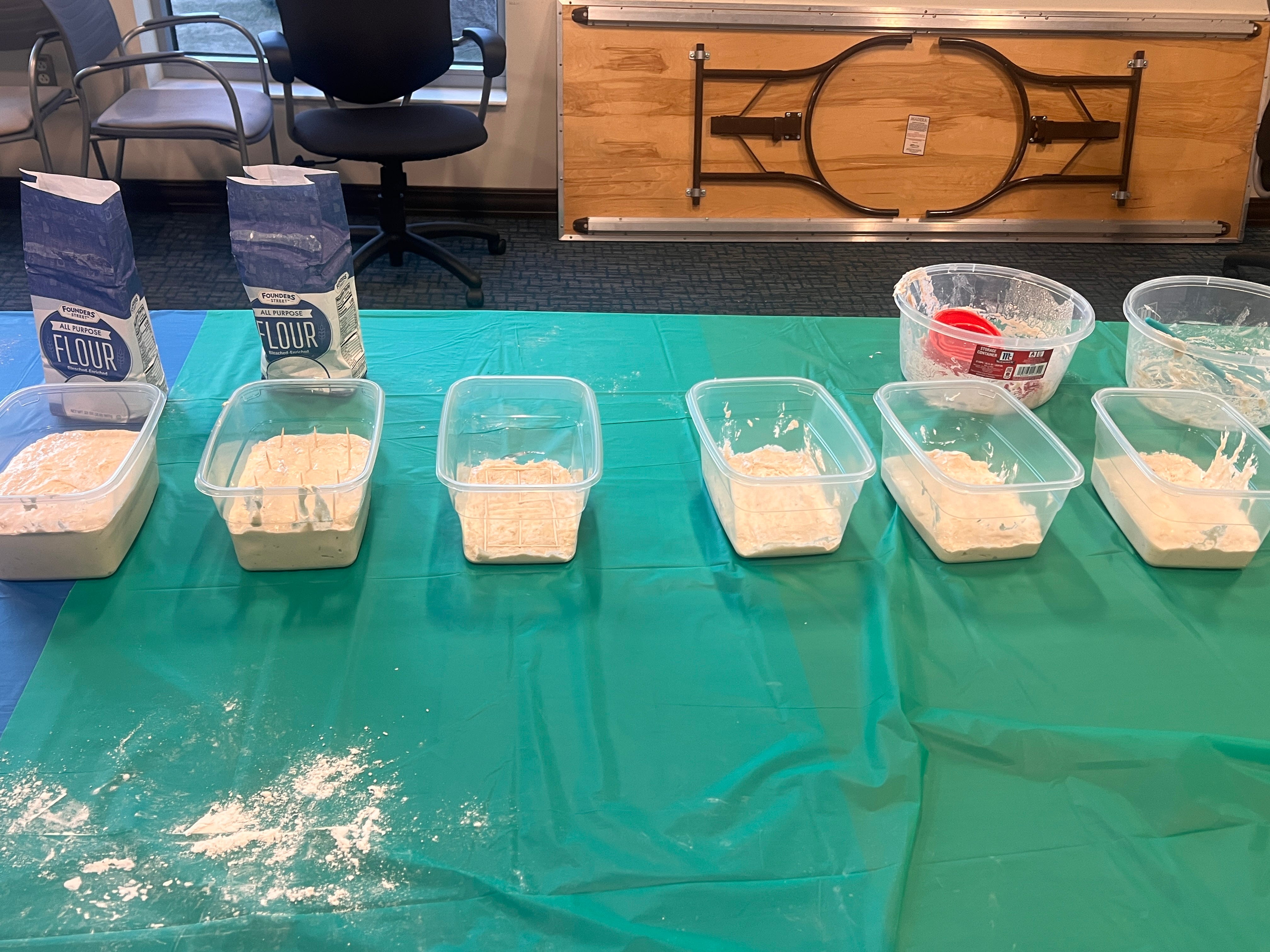
This is the difference between teaching information and designing for understanding. When the environment carries part of the load, you’re not lowering the bar, you’re removing unnecessary friction. The moment the concept becomes visible, the math stops being guesswork.
This is how you teach estimation as a judgment skill, not just a formula. Thank you for sharing. I also have a personal question I wanted to ask. I left it inbox. When you have time, you can check it out.